Organ Donation

One organ donor can save up to 8 lives and improve more than 75 through tissue and cornea donation. 
Register today and share your decision with your family.
13
People die each day while waiting.
103,233
People are waiting for a transplant in the U.S.
75+
Lives are healed from one donor.
Facts sourced from HRSA and UNOS, 2025

Frequently Asked Questions

What is Organ Donation?

Organ donation is the surgical recovery of organs and tissues from a donor and their transplantation into a recipient. It is possible only after all life-saving efforts have been provided.

Who Can Donate?

Almost anyone can be a donor. Medical criteria and circumstances determine what can be donated at the time of death. Some donations can be made electively by living donors.

What Can Be Donated?

The following lifesaving organs and tissues may be donated, once all applicable criteria are met.

Organs
Heart, lungs, liver, kidneys, pancreas, and intestine.
Tissues
Corneas, skin, bone, tendons and ligaments, heart valves, veins and arteries.

How Does Donation Work?

Hospitals notify DonorConnect when donation may be possible. With authorization, we coordinate evaluation and recovery. 

1. Referral from the hospital and medical evaluation
2. Authorization and support for the family
3. Match run through the national system (UNOS/OPTN)
4. Organ recovery and transport to transplant centers
5. Follow up and bereavement support for donor families

More FAQ's About Organ Donation

The Waiting List & Matching

The organ transplant waitlist is a pool of candidates who are registered to receive a life-saving organ transplant.

When a donated organ becomes available, the matching system generates a list of potential recipients.

This list created based on organ type, medical urgency, time on waiting list, organ size, blood type, and genetic characteristics. 

The goal is to match an organ with the most compatible recipient for the highest success rate.

DonorConnect is not involved in the actual matching of organs with donors. This process is actually executed through the United Network for Organ Sharing (UNOS).

Please visit the UNOS website to learn more about the waiting list and the matching process.
UNOS Organ Matching

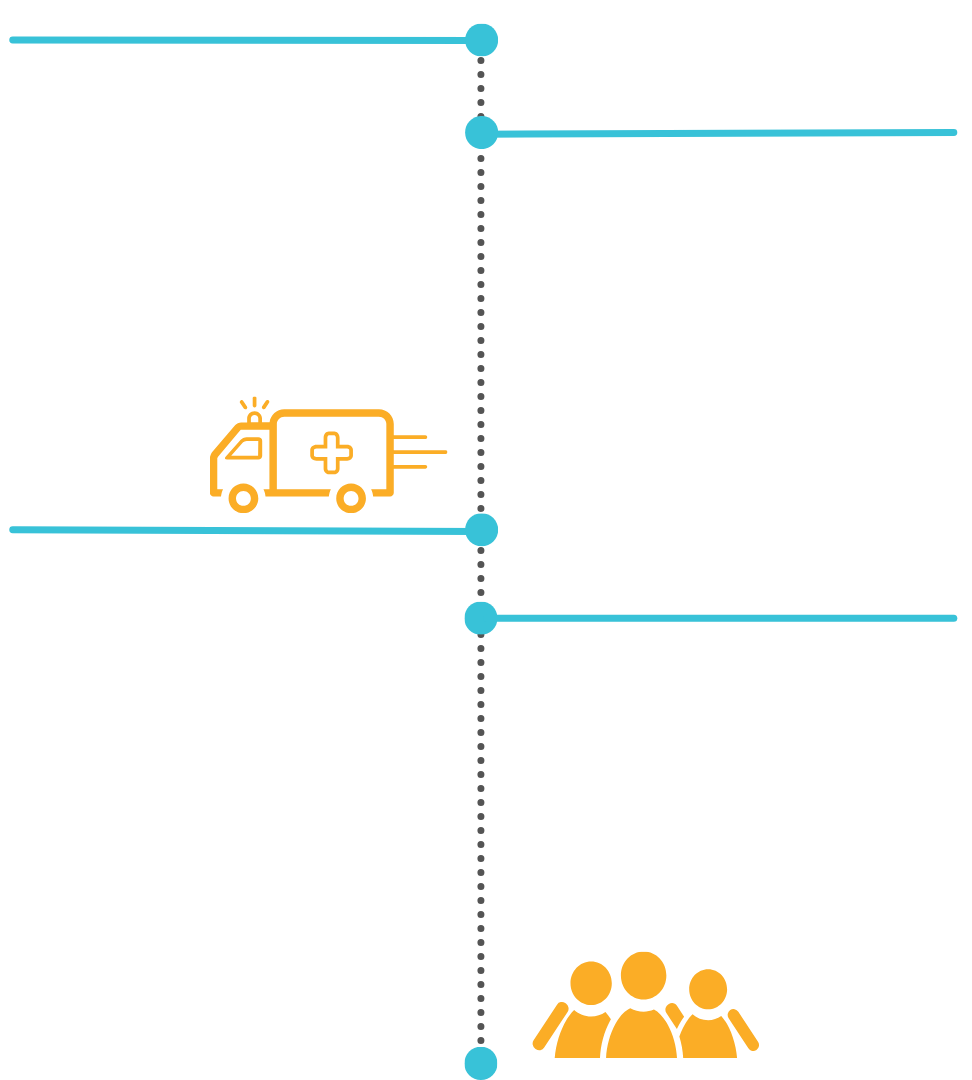
When Does Organ Donation Occur?

Blue chronological timeline with orange icons of an ambulance and group of people.
Evaluated For Donation
During the time leading up to a potential donors death, a medical practicioner representing DonorConnect will collaborate with doctors, nurses, and family members of the potential donor to discuss the viability of organ donation.
Talking to Family
If the patient had signed up to be an organ donor, this is shared with the family. If they had not signed up, the patients family will have the opportunity to consider organ donation for their loved one.
Donor Must Pass In A Hospital
To ensure a successful outcome for transplant recipients, potential organ donors must pass away in the hospital under the care of medical professionals Less than 3% of deaths in the United States result in organ donation.
Traumatic Injury
Medical professionals do everything they can to save the lives of people who have been injured. When all lifesaving measures have been exhausted, a person may be evaluated for donation.
Making the decision to donate life is a generous, heroic act. One organ and tissue donor can save 8 lives and enhance the lives of over 75 others. Be a hero and register as a donor today.
Register Your Decision